

In an ongoing quest to develop and expand export markets, South Africa is strategically focusing on the Indian market, as this market has over one billion people and a rising demand for high-quality fresh produce. Feedback from the Indian trade has revealed that significant potential exists to grow the market in all categories of South African fruit and thus and the industry’s export focus on India is expected to provide new impetus to the country’s efforts to boost its presence in this large consumer market.
Market development in the region has been achieved due to a concerted push from the South African fresh produce industry bodies and government and recent diplomatic trade missions and market development initiatives have highlighted India’s growing significance as a long-term trading partner for South Africa’s fruit sector.
South Africa’s fresh produce exports to India have expanded significantly in recent years As South African exporters are ideally positioned to fill India’s counter-season production gap, the growth in South African fruit exports to India have developed to supplement this market shortfall.
With citrus exports leading the way, followed by apples, pears, grapes, and most recently avocados, India is emerging as an important market for South Africa’s fruit exports.
Citrus Leads the Charge
The South African citrus industry is the country’s fruit industry and accounts for the largest fruit volumes exported to India from South Africa. Citrus exports to India have almost tripled since 2020 and annual exports have grown to around 30,000 tonnes. Oranges, mandarins, and lemons are in strong demand across Indian retail and wholesale channels.
One of the factors that has constrained the development of this market for lemons was that market access was subject to mandatory in-transit cold treatment for lemons, a phytosanitary measure required by India. As lemons are sensitive to excessive cold, this was a challenging requirement. However, following the successes of recent pilot shipments demonstrating the viability of in-transit cold treatment, last month, the South African citrus industry celebrated the arrival of the first of lemons that successfully underwent the in-transit cold treatment for lemons en route to India.
According to Boitshoko Ntshabele, CEO of the Citrus Growers’ Association of Southern Africa (CGA), the arrival of this first shipment of lemons for the 2025 season marked a milestone in the deepening trade relationship between the two countries. “This shipment signifies the strong trade relationship between South Africa and India,” Ntshabele stated. “It starts the season, and hopefully also starts an era of increased exports and opportunities for our two countries.”
Apples and pears
Within the last few years, the volume of South African apples and pears on the market in India has increased significantly. South Africa’s efforts to increase market share have been boosted by an agreement signed in 2024 between India and South Africa, which allows for in-transit sterilisation of South African apples and pears. This has shortened the time it takes to reach the market, allowing fruit to arrive in fresher condition. As a result, apple exports to India have expanded significantly during the past two years, from 200,000 cartons to 1.5 million.
South Africa’s apple and pear exports to India have experienced notable growth, driven by targeted promotional efforts, strategic variety selection, and a growing presence in the market. Through the work of industry body Hortgro, South African fruit has gained increased visibility, with promotional materials for apples and pears now widely displayed across Indian retail spaces. New full-red Gala-type apples and traditional favourites have been carefully selected to meet Indian consumer preferences for crispness and vibrant appearance, while innovative blushed pear varieties are being introduced to expand the offering. Despite competition from other Southern Hemisphere suppliers like Chile and New Zealand, South Africa has successfully carved out a niche through consistent quality and smart marketing.
Avocados
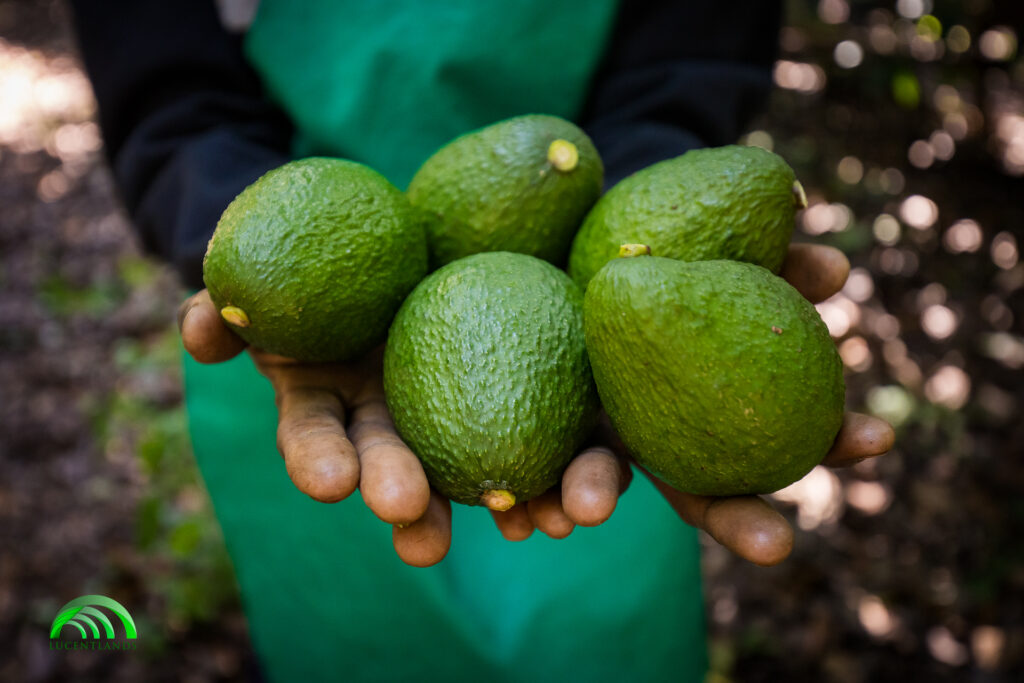
South African avocados were granted access to the Indian market in 2024, and this has provided the impetus for a marketing push for avocados to India. While still in early stages, this category is growing rapidly. South African exporter Westfalia Fruit has begun shipping Hass avocados to India. Access to this market is a significant development for South Africa, particularly with regards to India’s growing appetite for nutrient-rich, premium produce. The avocado category is thus poised for growth, particularly among India’s expanding urban middle class.
Ensuring competitiveness and reducing tariffs
India presents strong growth potential for South African fruit exports, but high import tariffs of up to 30%, especially on citrus, remain a major barrier. These tariffs place South Africa at a disadvantage compared to competitors like Chile and Peru, who benefit from preferential trade agreements that lower their market entry costs. While export volumes to India have grown, the absence of such agreements limits broader access to price-sensitive consumer segments.
Indian traders value South African fruit but have warned that tariff reform is critical to maintaining competitiveness. Despite industry efforts to improve phytosanitary protocols and introduce in-transit cold treatment, reducing tariffs remains the most urgent challenge.
Encouragingly, a recent joint delegation from the South African Department of Agriculture and Fruit SA to India received positive signals that bilateral trade negotiations may soon begin. Discussions with the Indian Ministries of Agriculture and Commerce revealed a shared interest in expanding fresh produce trade, with market access prioritised on both sides.
The delegation also participated in Fresh Produce India, where South Africa was prominently featured, strengthening ties with Indian importers. While no timeline has been confirmed, the upcoming G-20 Summit in South Africa this November could serve as a key platform for advancing negotiations. A potential agreement would involve reciprocal trade, possibly opening South Africa to Indian subtropical fruits.
To fully unlock India’s potential, tariff reform and formal trade agreements are essential. Without them, South Africa risks losing ground to competitors in one of the world’s most promising fresh produce markets.